How AI Overviews changed SEO is not simply a story about AI replacing traditional search results. It is about how the search journey itself has become more complex. Google’s latest research shows that the average AI Mode search is now three times longer than a traditional Search query, reflecting a shift toward more detailed and conversational searches.
Before AI Overviews, SEO reporting largely revolved around familiar metrics such as keyword rankings, organic clicks, impressions, CTR, and website traffic. Those metrics still matter, but marketers now need to consider a wider search environment where AI-generated answers can appear alongside traditional results.
That shift has changed how content needs to be planned and evaluated. How AI Overviews changed SEO is ultimately about moving beyond the idea that visibility means simply ranking a webpage. Content now needs to demonstrate relevance, depth, expertise, and usefulness across increasingly complex search experiences.
For marketers, the question isn’t whether SEO still matters. It does. The more important question is what needs to change in your SEO strategy now that search itself has changed?
SEO Before AI Overviews: What Marketers Used to Optimize For
Before AI Overviews became a prominent part of Google Search, the traditional SEO playbook was easier to define. Marketers focused heavily on keyword rankings, organic CTR, impressions, backlinks, technical SEO, and website traffic.
The basic journey looked like this:
Search query → organic result → website visit
A higher ranking generally meant greater visibility, and greater visibility could lead to more clicks. Marketers could then connect those visits to leads, sales, and other conversions.
SERP features had already started changing this model. Featured snippets, People Also Ask, local packs, and knowledge panels allowed Google to display more information directly on the results page. Still, the SEO strategy largely revolved around getting a webpage discovered and clicked.
Content strategies also tended to be organized around individual keywords and search volumes. A marketer might identify a valuable keyword, create a dedicated page, optimize it, build authority around it, and track its ranking over time.
That approach still has value. But how AI Overviews changed SEO becomes clearer when you compare this relatively linear search journey with today’s more layered results.
What Changed When AI Overviews Entered the SERP?
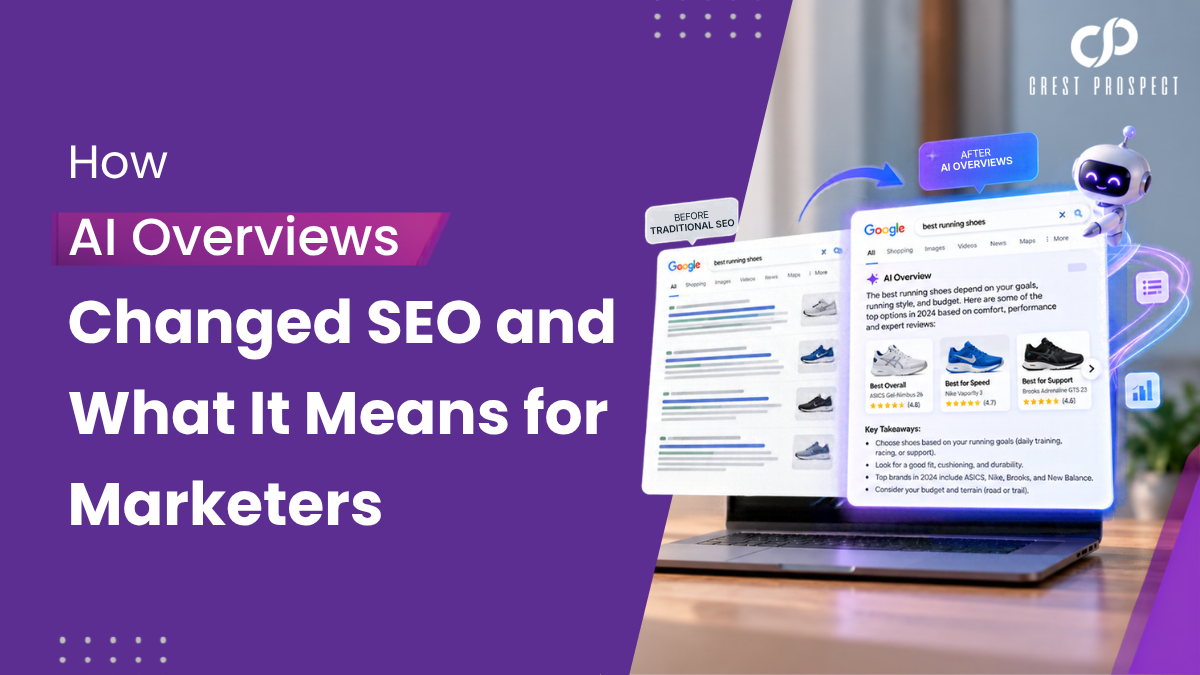
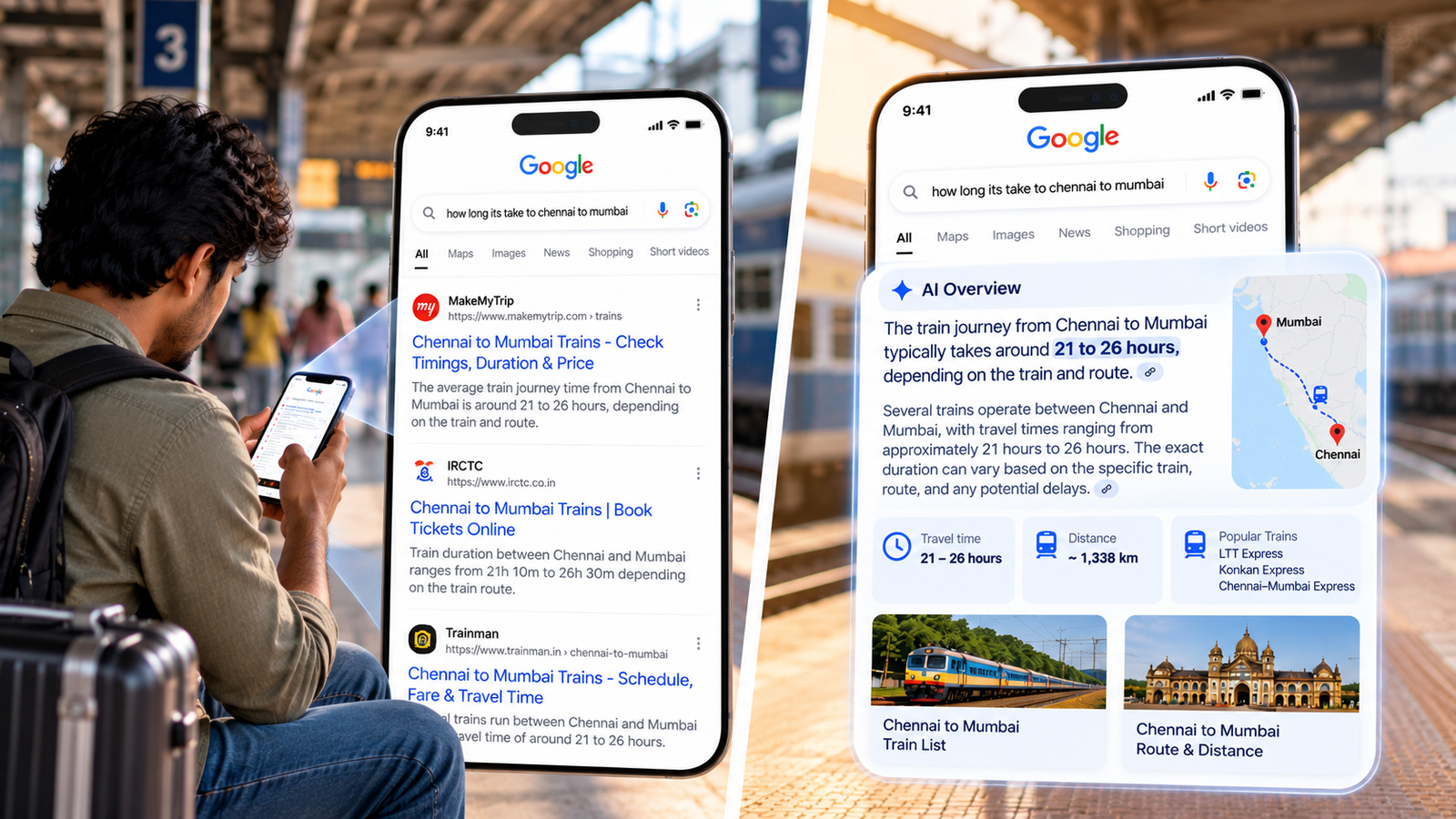
AI Overviews introduced another layer between the user’s query and the traditional organic results. Instead of simply presenting a list of webpages, Google can generate a response that synthesizes information and provides links to supporting sources.
This has changed the way marketers think about search visibility.
A user can now get an initial explanation without immediately clicking a blue link. For broader or more complex searches, the AI-generated response may also help the user understand the topic before they decide which sources to explore.
From Ranking for a Query to Contributing to the Answer
This is one of the clearest examples of how AI Overviews changed SEO.
The traditional question was:
Can my page rank for this keyword?
Now marketers also need to consider:
Does my content provide information that is useful within an AI-generated search experience?
That doesn’t mean rankings no longer matter. Organic visibility remains important, and Google continues to direct users toward websites through its search results and AI experiences.
The difference is that SEO strategy now has to account for more than a webpage’s position. Relevance, topical depth, clear explanations, supporting evidence, and overall authority can influence how useful a piece of content is within a broader search experience.
Before vs. After AI Overviews: What Actually Changed?
| Before AI Overviews | With AI Overviews |
|---|---|
| Blue-link rankings were central | AI-generated answers add another visibility layer |
| CTR was closely tied to SEO performance | CTR needs to be interpreted alongside SERP visibility |
| Keywords were often the starting point | Search intent and broader context matter more |
| Website traffic was a primary outcome | Visibility can happen before a website visit |
| Individual pages targeted specific queries | Content can address connected questions and topics |
| SERP features supplemented organic results | AI responses can become part of the initial search experience |
The important point is that AI Overviews have not erased traditional SEO. Technical accessibility, relevant content, internal linking, authority, and search intent remain important.
What has changed is the number of ways a business can become visible during a search.
A page doesn’t necessarily need to be the first blue link to contribute to the user’s discovery journey. At the same time, marketers shouldn’t assume that appearing somewhere within an AI experience automatically produces business value.
The strategy needs to connect visibility with the right audience, search intent, and commercial outcomes.
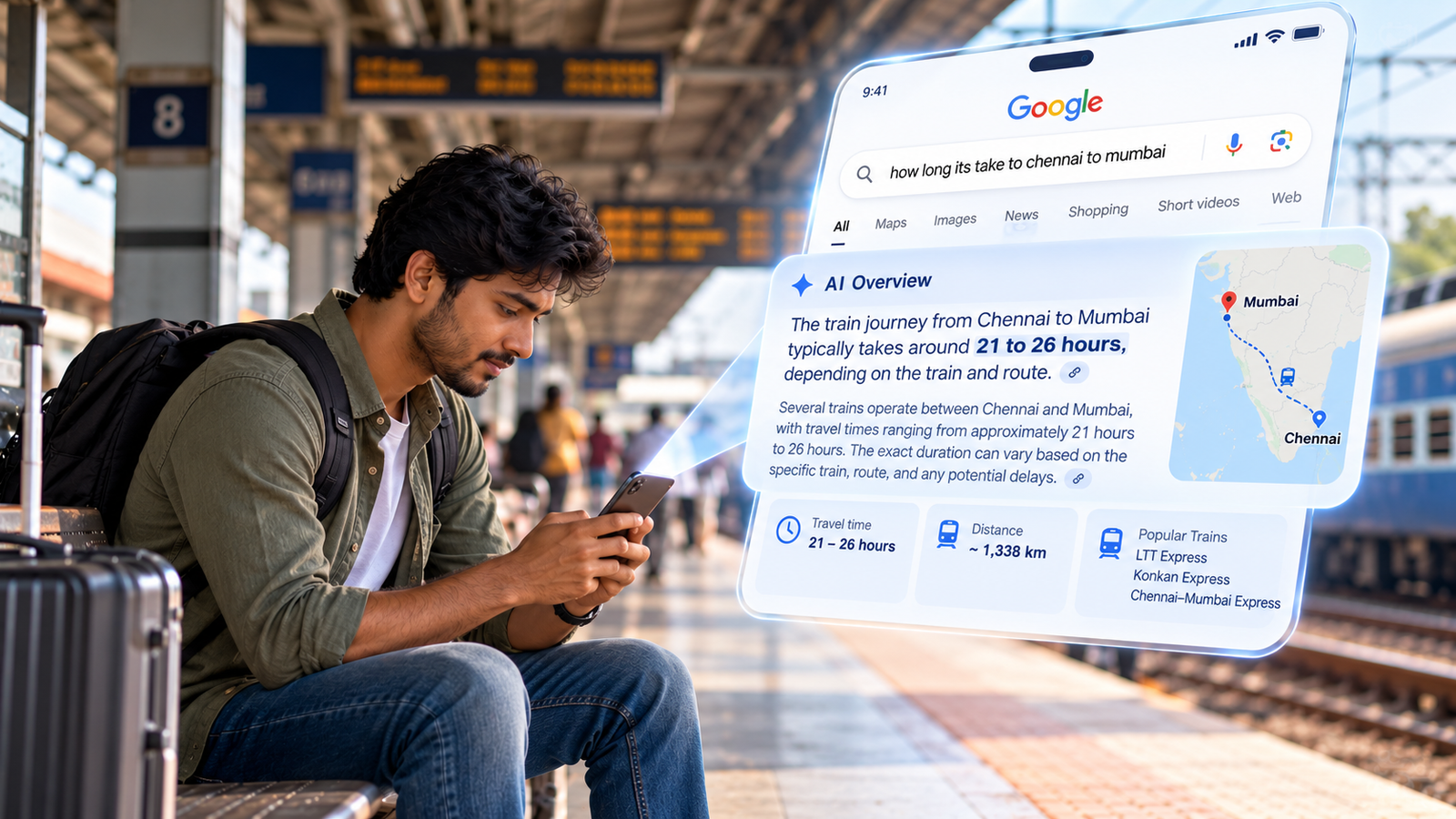
How AI Overviews Changed Organic CTR and Traffic
One of the biggest changes marketers need to watch is the relationship between AI Overviews, organic CTR, and traffic. When users can get a useful summary directly within the search experience, they may have less reason to click a traditional result for certain queries.
But the effect isn’t the same across every search.
Informational queries are more exposed because users may only need a definition, explanation, or quick fact. Commercial searches often require deeper research, comparisons, pricing information, reviews, or a visit to a company’s website before someone makes a decision.
That means a lower CTR doesn’t automatically indicate that an SEO strategy is failing. Marketers need to look at the context behind the change.
Why Fewer Clicks Don’t Always Mean Worse SEO
Imagine an article that previously received 500 clicks from 10,000 impressions. After AI Overviews appear for the query, it receives 350 clicks from 15,000 impressions.
The click count dropped, but the page gained significantly more search exposure.
That doesn’t mean the traffic loss should be ignored. It means marketers need to evaluate several signals together, including impressions, rankings, CTR, conversions, branded searches, and SERP visibility.
This is another important part of how AI Overviews changed SEO. Search performance can no longer be judged from clicks alone.
Search Visibility Is Now Bigger Than Rankings
For years, marketers could explain SEO performance by showing where a page ranked for its target keywords. Rankings remain useful, but they don’t tell the complete story anymore.
A modern search result can contain:
- Traditional organic listings
- Featured snippets
- People Also Ask
- Local results
- Knowledge panels
- AI Overviews
- Other SERP features
This means search visibility now includes more than occupying a position in the standard organic results.
A business might appear through a featured answer, earn visibility through an AI Overview, or become familiar to a potential customer through repeated exposure across related searches. These interactions can happen before someone ever visits the website.
The goal isn’t to stop measuring rankings. Instead, marketers should place rankings within a larger visibility framework.
For example, a content page targeting a competitive topic could be evaluated through:
Ranking position + impressions + SERP features + CTR + AI visibility + conversions
That gives marketers a much clearer picture of what their content is actually achieving.
Why Topical Authority Matters More in AI Search
AI-generated search experiences make shallow, isolated content less useful as a long-term strategy. A page that briefly mentions a topic may not provide enough context to establish meaningful expertise.
This is where topical authority becomes increasingly important.
Rather than creating separate pages simply because several keywords have different variations, businesses can build a connected body of content around a subject. That might include foundational guides, detailed subtopics, comparisons, practical examples, original research, and supporting resources.
From Individual Keywords to Topic Coverage
Consider a company offering PPC services.
Instead of creating isolated pages around:
- PPC management
- PPC campaign optimization
- PPC reporting
- PPC advertising costs
the company could build a broader resource covering PPC strategy, campaign management, budgeting, optimization, measurement, common problems, and industry-specific considerations.
Internal links can connect these resources, while original insights and useful examples give the content more depth.
This doesn’t mean keywords no longer matter. They still help search engines understand relevance. But how AI Overviews changed SEO includes a broader shift toward understanding relationships between questions, concepts, entities, and supporting information.
Strong topical authority also gives marketers more opportunities to answer the different follow-up questions that can emerge during a search journey.
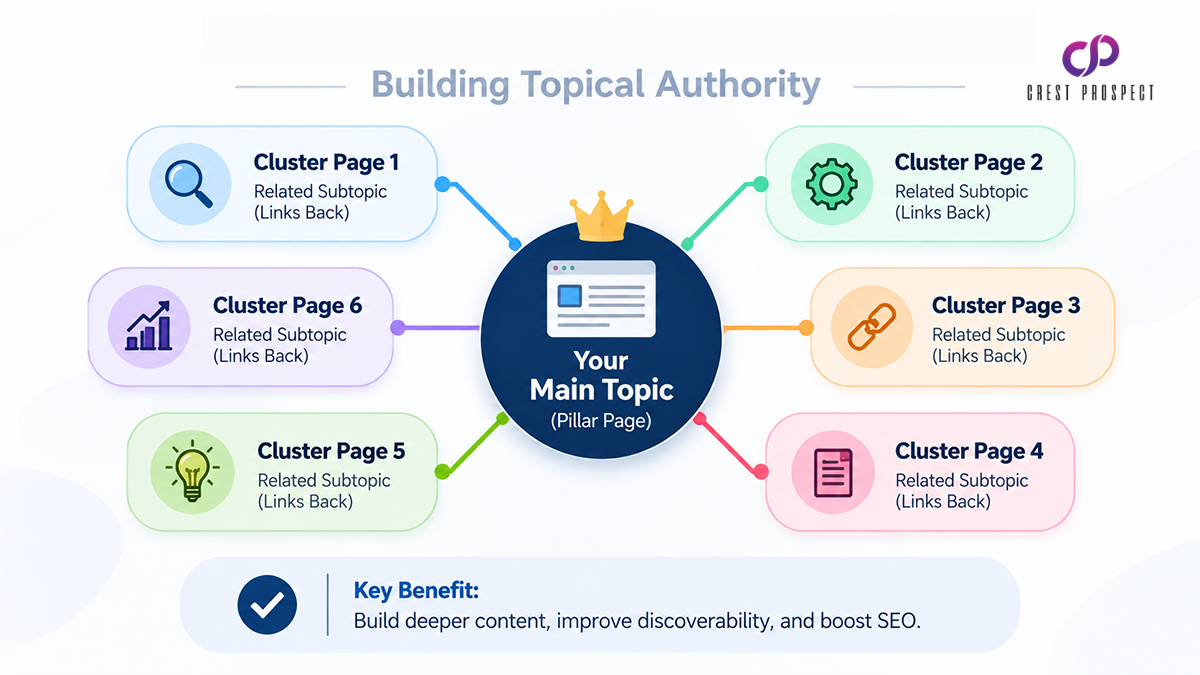
What AI Overviews Mean for Content Strategy
The biggest content change is not that marketers need to write specifically for AI Overviews. It is that content needs to offer more value than a basic summary of information already available everywhere.
A strong SEO strategy should still address search intent, but the content should also answer related questions, explain concepts clearly, and provide information that helps the reader make a decision.
Answer the Question Earlier
Don’t make readers work through several paragraphs before finding the information they searched for. Lead with a clear answer, then add context, examples, evidence, and practical guidance.
This approach also makes content easier to understand when search systems extract information from a page.
Add Information That Isn’t Generic
AI-generated answers can already summarize common knowledge. Your content needs reasons for someone to choose it as a source.
Useful additions include:
- Original research
- First-party data
- Expert commentary
- Case studies
- Industry examples
- Unique observations
- Practical frameworks
For example, an agency writing about PPC management could explain general PPC concepts, but a stronger resource could also include campaign benchmarks from its own projects, original analysis, or examples of how different industries approach paid search.
Make Content Easy to Understand
Good structure remains important.
Use descriptive headings, short paragraphs, tables, lists, definitions, examples, and clear explanations. Don’t sacrifice useful detail simply to make a page shorter.
The goal is content that works for both the person reading it and the systems trying to understand it.
Where AEO and GEO Fit Into the New SEO Landscape
AI Overviews have also made concepts such as Answer Engine Optimization (AEO) and Generative Engine Optimization (GEO) more relevant to SEO discussions. But neither should be treated as a shortcut around traditional optimization.
AEO focuses on making content useful as a direct answer. That means identifying the questions users ask and providing clear, structured responses.
GEO focuses more broadly on AI search visibility, including the possibility of a brand or its information being mentioned or referenced within generative experiences.
The three approaches overlap:
SEO creates discoverability. AEO improves answer-focused visibility. GEO expands the focus toward generative search.
This is why businesses shouldn’t create completely separate content strategies for each one. A technically sound, authoritative page with clear answers can support traditional search while also creating opportunities across newer search experiences.
However, marketers should avoid promising that specific AEO or GEO tactics will guarantee inclusion in AI Overviews or generate AI citations. Search systems decide what information to display based on the query and the sources available.
What Should Marketers Stop Doing?
Understanding how AI Overviews changed SEO also means knowing which habits are becoming less useful.
Stop:
- Treating rankings as the only measure of SEO success.
- Creating thin pages for every minor keyword variation.
- Publishing generic content that adds nothing new.
- Assuming more keyword repetition will create more visibility.
- Treating AI Overviews as a shortcut around strong SEO fundamentals.
- Assuming one optimization tactic guarantees AI visibility.
- Measuring every informational query only by clicks.
The common thread is simple: optimize for usefulness, not just placement.
A page that ranks well but provides little original value can struggle to remain competitive as search becomes better at synthesizing information.
What Should Marketers Prioritize Now?
The answer isn’t to throw away everything that worked before. Instead, marketers should strengthen the parts of SEO that continue to create value while adapting content to a more complex search environment.
Prioritize:
- Strong technical SEO foundations so important content can be discovered and accessed.
- Search intent rather than keywords alone.
- Deeper topical coverage around subjects that matter to your audience.
- Original and useful information that generic content cannot easily replicate.
- Clear content structure that makes answers and supporting details easy to understand.
- Expertise and authority demonstrated through credible information and real experience.
- Broader search visibility tracking, including SERP features and AI search.
- Regular content updates when facts, products, regulations, or industry information change.
This is the practical lesson behind how AI Overviews changed SEO. Marketers don’t need to abandon SEO. They need to make the strategy more focused on the quality, usefulness, and authority of the information being presented.
How to Measure SEO Performance in the AI Overview Era
As how AI Overviews changed SEO becomes clearer, measurement needs to change with it. Rankings, clicks, impressions, and CTR still belong in your reports, but they should no longer be viewed in isolation.
| Area | Metrics to Track |
|---|---|
| Organic performance | Rankings, clicks, impressions, CTR |
| SERP visibility | Featured snippets, PAA, AI Overview presence |
| Brand visibility | Branded searches, brand mentions |
| AI visibility | AI mentions, citations |
| Business impact | Leads, conversions, revenue |
For example, a page may lose some clicks after an AI Overview appears for its target query while maintaining strong impressions and generating more branded searches. That doesn’t automatically make the change positive, but it gives marketers more context for evaluating performance.
The important shift is from asking “How much traffic did this keyword generate?” to asking “How visible is our brand across the search journey, and is that visibility producing business results?”
That broader view makes it easier to identify which pages are losing valuable traffic, which are gaining new visibility, and where the SEO strategy needs adjustment.
How Crest Prospect Helps Businesses Adapt to AI Search
Understanding how AI Overviews changed SEO is only the first step. The harder part is translating those changes into a practical strategy that supports organic visibility, content performance, and business growth.
Crest Prospect helps businesses adapt through SEO strategy, content optimization, search intent analysis, topical authority, AEO, GEO, and AI visibility tracking. Rather than treating AI search as a completely separate channel, the focus is on strengthening the existing search strategy while identifying new opportunities created by changing SERPs.
If your organic performance has shifted as AI search evolves, book an AI SEO strategy call with Crest Prospect to identify what’s changing, where your visibility is being affected, and what your search strategy should prioritize next.
Conclusion
How AI Overviews changed SEO isn’t a story about traditional SEO becoming irrelevant. It is a shift from viewing search visibility through rankings and clicks alone to understanding a much broader search experience.
Rankings still matter. Organic traffic still matters. But topical authority, useful content, SERP visibility, brand presence, and AI visibility now deserve a place in the strategy and reporting process.
The businesses most prepared for this change won’t abandon the fundamentals. They’ll build on them with content that answers real questions, demonstrates expertise, and gives people a reason to trust and explore the brand.
Want to know how AI Overviews are affecting your organic visibility? Book a free AI SEO strategy call with Crest Prospect and identify the opportunities your current SEO strategy may be missing.
How AI Overviews Changed SEO FAQs
1. How did AI Overviews change SEO?
AI Overviews expanded search visibility beyond traditional blue-link rankings. Marketers now need to consider AI-generated answers, SERP features, organic CTR, brand visibility, and how useful their content is within broader search experiences.
2. Do AI Overviews reduce organic traffic?
They can affect organic CTR and traffic for some queries, particularly informational searches where users can get enough information directly from the search results. The impact varies by query, industry, and search intent.
3. Does SEO still matter with AI Overviews?
Yes. Technical SEO, search intent, relevant content, internal linking, authority, and crawlability remain important. AI Overviews have changed the search experience, but they haven’t eliminated the need for strong SEO foundations.
4. How do AI Overviews affect organic CTR?
When users receive an answer directly within Google Search, they may have less reason to click a traditional organic result. Marketers should therefore evaluate CTR alongside impressions, rankings, SERP visibility, branded searches, and conversions.
5. Does ranking #1 guarantee appearing in an AI Overview?
No. A top organic ranking does not guarantee inclusion in an AI Overview. AI-generated results can use information from multiple sources, and visibility can vary depending on the query and search experience.
6. How can businesses optimize content for AI Overviews?
Create useful, authoritative content that directly addresses search intent. Clear answers, strong topical coverage, original research, expert insights, logical structure, and supporting evidence can make content more valuable within modern search experiences.
7. What is the difference between AI Overviews, AEO, and GEO?
AI Overviews are a Google Search feature that provides AI-generated responses. AEO focuses on making content useful as a direct answer, while GEO focuses on improving visibility within generative AI experiences. They overlap but aren’t the same thing.
8. Does topical authority matter for AI search?
Yes. Developing comprehensive coverage around important subjects can help establish stronger context and demonstrate expertise. Topical authority should be supported by useful content, relevant internal linking, credible information, and genuine expertise.
9. How should marketers measure SEO performance now?
Track traditional metrics such as rankings, clicks, impressions, and CTR alongside SERP features, AI visibility, brand searches, mentions, leads, and conversions. This provides a broader view of how search contributes to business results.
10. What should businesses change in their SEO strategy because of AI Overviews?
Businesses should focus less on rankings alone and more on search intent, topical depth, original information, authority, content structure, and broader search visibility. SEO fundamentals should remain the foundation while content strategies adapt to AI-powered search.