Zero-Click Search: What It Means for Your Marketing Strategy
A zero-click search happens when someone gets the information they need directly from the search results without visiting a website. And this is no longer a small part of search behaviour. According to a 2026 analysis, 68.01% of Google searches in the U.S. ended without a click during the first four months of 2026.
For marketers, that number changes the way search performance needs to be viewed. A search that doesn’t produce a website visit isn’t automatically a failed SEO opportunity. Your brand might still appear in a featured snippet, local result, knowledge panel, or AI-generated answer, putting it in front of someone who may remember it later.
The challenge is knowing when zero-click visibility creates genuine business value and when it simply reduces valuable website traffic. That means SEO reporting can no longer focus on clicks alone. Marketers need to consider search visibility, brand exposure, SERP features, AI visibility, consideration, and conversions together.
This guide explains what zero-click search means for your marketing strategy and how to adapt without losing sight of traffic and revenue.
What Is a Zero-Click Search?
A zero-click search is a search where the user gets an answer or useful information directly from the search results without clicking through to a website.
Consider someone searching for “how many ounces are in a pound.” They may see the answer immediately and leave. There is little reason to visit a webpage for such a simple question.
Other searches can work differently. Someone searching for “best PPC agency for small businesses” may see several search features, but still need to visit websites before making a decision.
That distinction matters because zero-click search isn’t automatically bad for marketers. The value depends heavily on the intent behind the query.
Common Zero-Click Search Examples
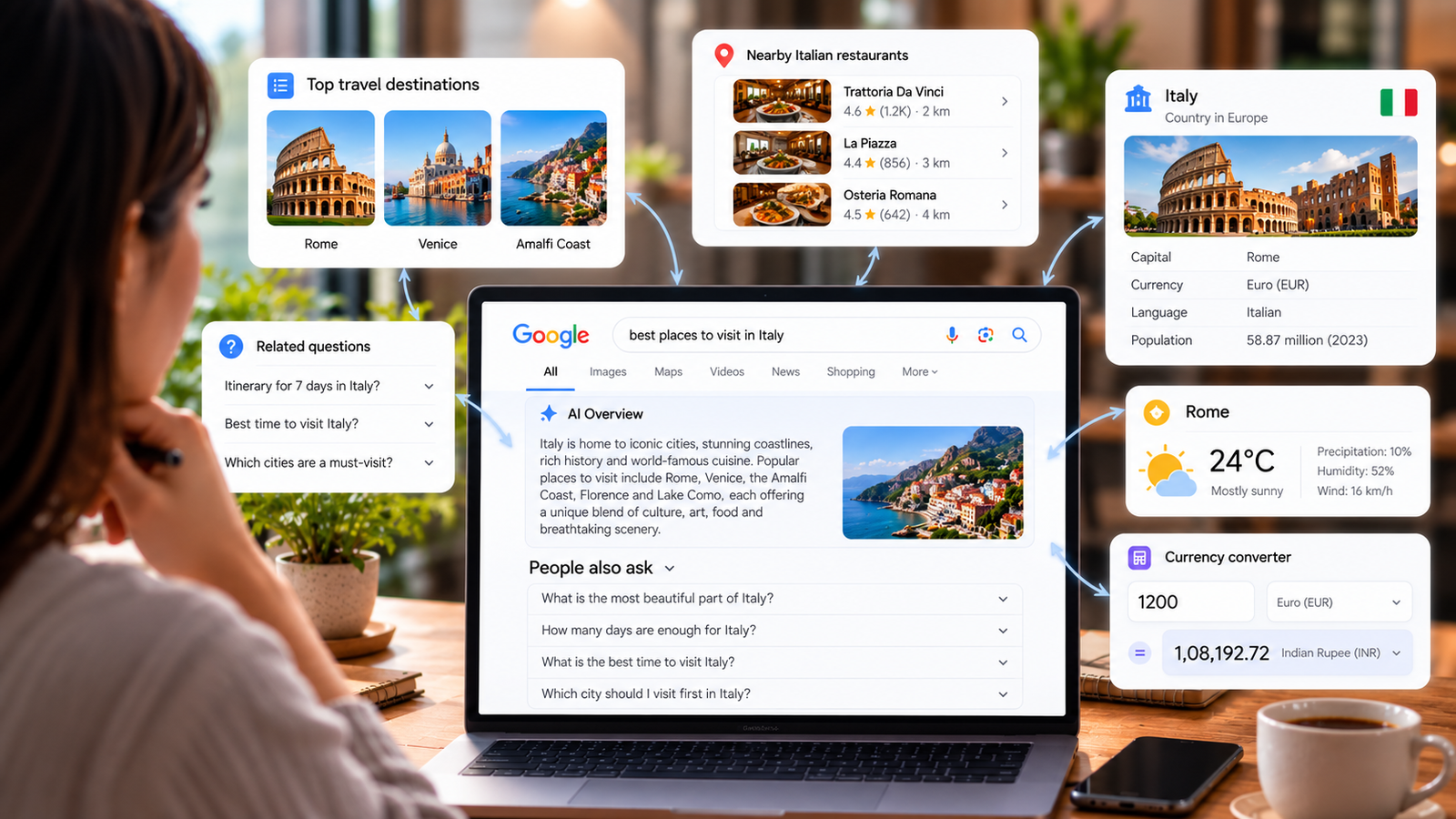
A search can become zero-click through several SERP features:
| SERP Feature | What the User May Get Without a Click |
|---|---|
| Featured snippet | A direct answer or short explanation |
| People Also Ask | Answers to related questions |
| Knowledge panel | Information about a person, company, or entity |
| Local pack | Business locations, ratings, hours, and contact details |
| Calculator | Immediate numerical result |
| AI-generated answer | A synthesized response to a broader question |
The important point is that your website doesn’t always need to receive the click for your brand or information to gain visibility.
Why Are More Searches Becoming Zero-Click?
Search engines have become better at understanding what users are looking for and presenting useful information directly in the results.
Someone looking for a definition doesn’t necessarily need to visit a 1,500-word article. A person checking a business’s opening hours may only need a local result. Someone asking a simple factual question may want an answer in seconds.
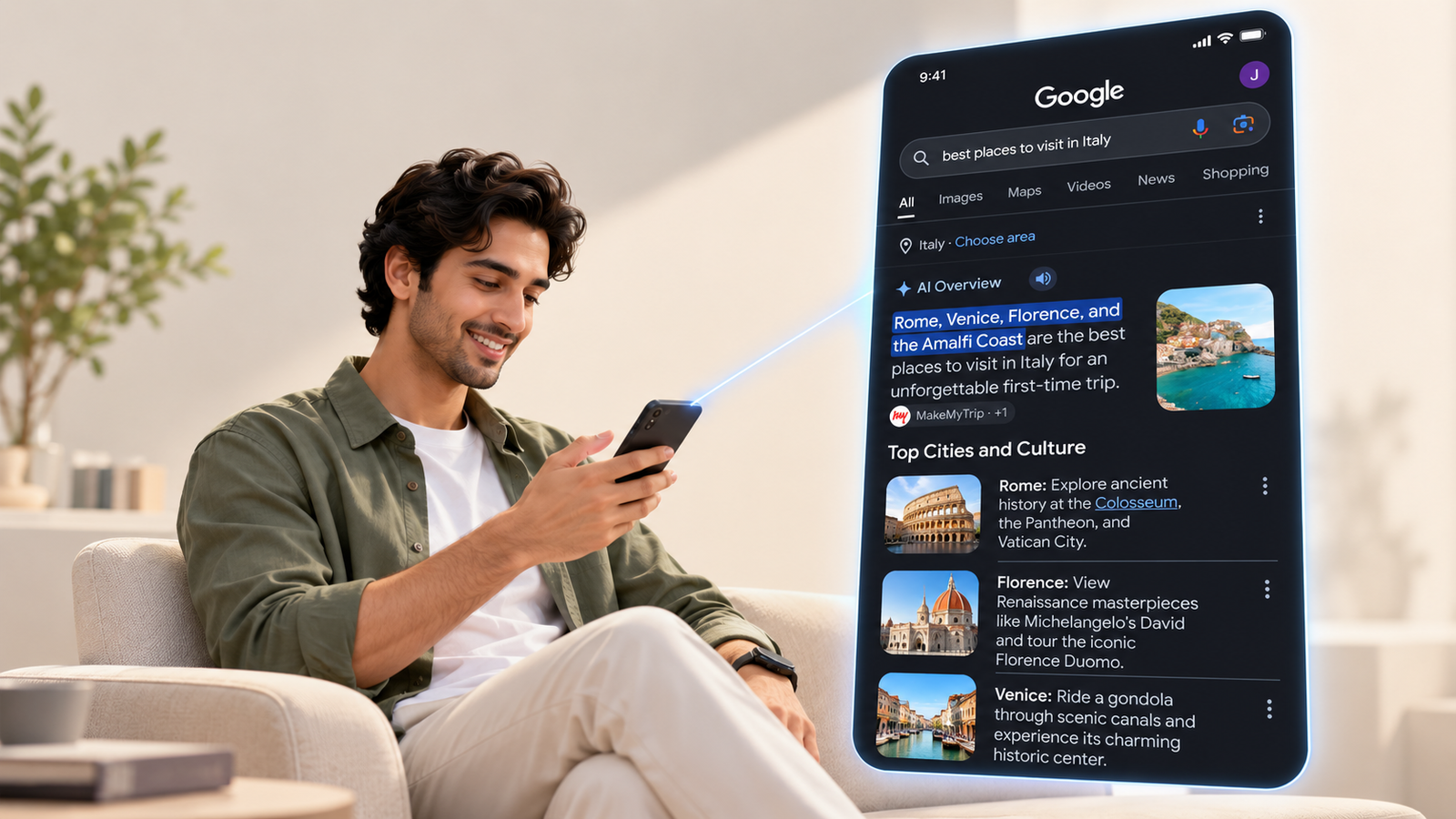
AI-powered search is pushing this behaviour further by allowing systems to synthesize information into longer responses.
For marketers, this means the search results page itself has become part of the content experience.
Instead of thinking only about:
“How do I get someone to click my page?”
the better question can sometimes be:
“How do I make sure my brand is visible when the search is answered?”
This is especially relevant for informational searches, where users often have no immediate reason to visit a website.
Zero-Click Search vs. Traditional Organic Search
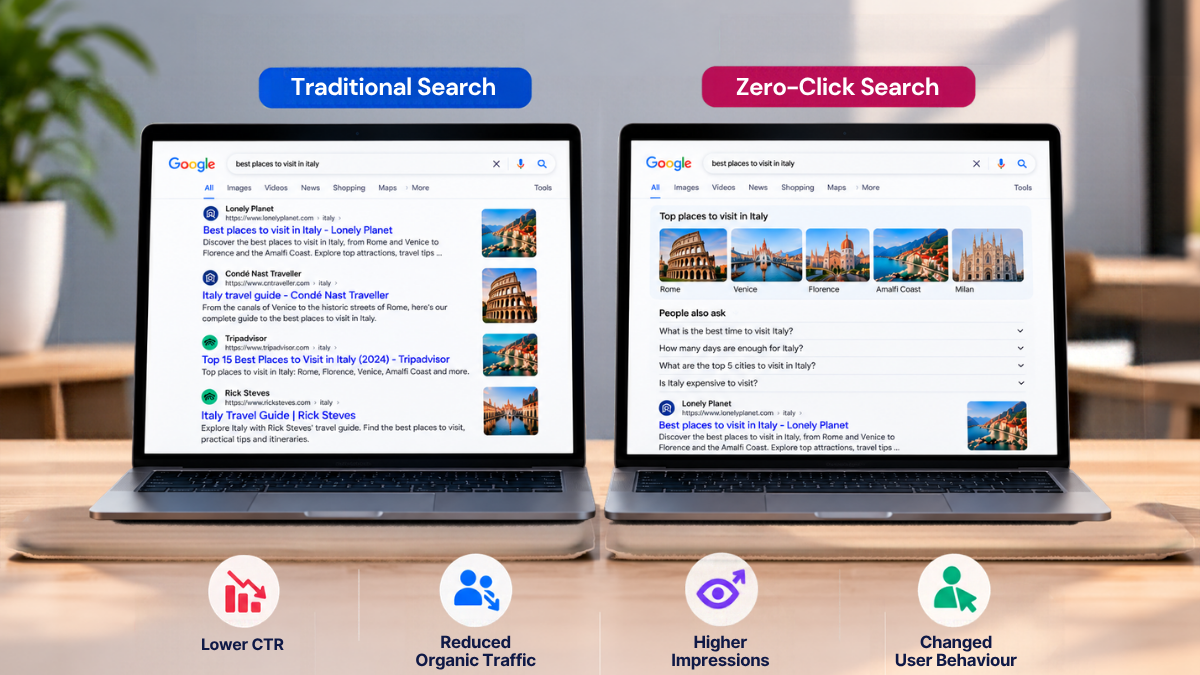
Traditional organic search has usually been measured around rankings, clicks, sessions, and conversions. A zero-click search introduces another layer because visibility can happen without the website visit.
| Traditional Organic Search | Zero-Click Search |
|---|---|
| User usually clicks a result | User may stay on the SERP |
| Website traffic is a major outcome | Visibility can happen without traffic |
| Rankings are a key indicator | SERP features also matter |
| CTR is closely watched | Impressions and visibility become important |
| Conversion often follows a visit | Influence can happen before a visit |
This doesn’t mean clicks have become irrelevant. Website traffic still matters when users need detailed information, compare products, request a quote, book a service, or make a purchase.
The difference is that clicks are no longer the only evidence that search visibility is working.
How Does Zero-Click Search Affect Organic Traffic and CTR?
The impact depends on the query.
Informational searches are particularly likely to produce zero-click behaviour because the user may only need a quick answer. A search such as “what is a meta description?” can potentially be satisfied directly on the SERP.
Commercial searches are different. Someone comparing SEO agencies, software platforms, or service providers usually needs more information before making a decision.
This means marketers shouldn’t look at declining CTR in isolation.
A page could receive fewer clicks because more information is being displayed directly in search while still maintaining strong impressions and visibility. On the other hand, if a valuable commercial page is losing both clicks and conversions, that requires a different response.
The first step is understanding which queries are generating zero-click behaviour and what those users actually want.
Are Zero-Click Searches Bad for SEO?
Not necessarily.
A zero-click result becomes a problem when a business loses valuable traffic without gaining meaningful visibility or business value in return. But appearing prominently in a search result can still introduce your brand to potential customers.
For example, someone might see your company answering a question today, remember the name, and search for your brand several days later when they are ready to explore a service.
This creates a broader measurement model:
Search visibility → Brand awareness → Consideration → Website visit → Conversion
The first interaction doesn’t always need to produce a click.
That said, marketers should be careful not to celebrate every impression as a success. A zero-click appearance for an irrelevant query isn’t particularly valuable. The objective is to gain visibility for searches that matter to your audience and business.
How Can Marketers Optimize for Zero-Click Searches?
The goal isn’t to prevent users from clicking. It’s to make your content capable of earning useful visibility wherever the SERP presents information.
Answer Important Questions Clearly
Start by identifying the questions your customers actually ask. Give concise answers near relevant headings, then provide additional context for users who want to learn more.
Structure Content for Search Features
Clear headings, short paragraphs, lists, tables, definitions, and question-based sections can make important information easier to understand and potentially surface within relevant search features.
Give Users a Reason to Continue
Don’t answer everything with two sentences and leave nothing else to explore. For topics where deeper information matters, provide examples, original insights, comparisons, research, tools, or practical guidance that gives users a reason to visit the website.
Strengthen Brand Visibility
Consistent brand information, authoritative content, relevant mentions, and strong topical coverage can help your business become more recognizable across search experiences.
The aim is not simply to win a zero-click search. It is to make every search interaction contribute something useful to the customer journey.
Where Do AEO and GEO Fit Into a Zero-Click Strategy?
AEO and GEO can support a broader zero-click search strategy, but they aren’t the same thing.
Answer Engine Optimization, or AEO, focuses on making content useful as a direct answer. Clear responses to questions, structured information, definitions, and concise explanations can support answer-focused visibility.
Generative Engine Optimization, or GEO, focuses on visibility within AI-generated search experiences. This can include creating authoritative information, original research, expert insights, and content that AI systems may potentially reference.
Zero-click search is the broader behaviour. AEO and GEO are strategies that can help businesses respond to different types of search experiences within that environment.
The objective remains the same: be visible and useful even when the search journey doesn’t immediately lead to a website click.
How Can You Measure Zero-Click Search Success?
Clicks should remain part of your reporting, but they shouldn’t be the only metric.
| Measurement Area | Metrics |
|---|---|
| Search visibility | Impressions, rankings, SERP features |
| Engagement | CTR, organic sessions |
| Brand awareness | Branded searches, brand mentions |
| AI visibility | AI mentions, citations |
| Business impact | Leads, conversions, assisted conversions |
Look at these metrics together.
For example, a page that earns a featured snippet but loses some CTR may still be valuable if impressions, branded searches, and conversions remain healthy.
The right question isn’t simply “Did people click?” It is “Did this search interaction contribute to visibility, consideration, or business results?”
How to Find Zero-Click Opportunities in Your Keyword Portfolio
Start with the keywords already generating impressions in Google Search Console or your SEO platform.
Look for queries that:
- Have substantial search impressions.
- Trigger SERP features.
- Answer simple informational questions.
- Show strong brand relevance.
- Have commercial potential beyond the initial answer.
Then review the actual search results.
If a query consistently produces featured snippets, People Also Ask results, local information, or AI-generated responses, consider whether your content can provide a stronger answer or a more useful resource.
This exercise can reveal opportunities that traditional keyword reports miss because the goal isn’t always another ranking position. Sometimes the opportunity is greater visibility within the SERP itself.
Why Crest Prospect Can Help With Zero-Click Search
Zero-click search requires a broader view of organic visibility. Crest Prospect can help businesses connect traditional SEO with content optimization, SERP strategy, AEO, and GEO so search performance isn’t measured by traffic alone.
The focus is on identifying valuable queries, understanding SERP behaviour, improving content visibility, and connecting search exposure with meaningful business outcomes.
Book a free search visibility strategy call with Crest Prospect to identify where zero-click search is affecting your website and where your content can capture more value from today’s search results.
Conclusion
A zero-click search isn’t automatically a lost opportunity. Sometimes the user doesn’t need a website visit because the search itself provides the answer. What matters is whether your brand is visible when that happens and whether the exposure contributes to the wider customer journey.
Clicks still matter, especially for commercial searches and conversions. But modern SEO needs to account for impressions, SERP features, brand visibility, AI visibility, and assisted outcomes too.
The goal isn’t to chase zero-click results at the expense of traffic. It’s to make your business valuable across the entire search experience.
If you’re seeing changes in organic CTR or want to understand which zero-click opportunities exist for your website, book a search visibility strategy call with Crest Prospect. Our team can help you identify valuable SERP opportunities and build a strategy that turns search visibility into meaningful business outcomes.
Zero-Click Search FAQs
1. What is a zero-click search?
A zero-click search occurs when a user gets the information they need directly from the search results without clicking through to another website.
2. Why are zero-click searches increasing?
Search engines provide more direct answers through features such as snippets, local results, knowledge panels, and AI-generated responses.
3. Are zero-click searches bad for SEO?
Not always. They can reduce clicks for some queries, but they can also increase brand visibility and exposure when your content appears prominently in search.
4. How do zero-click searches affect organic CTR?
When information is available directly in the SERP, users may have less reason to click. The effect varies depending on search intent and the type of SERP feature displayed.
5. Which SERP features create zero-click searches?
Featured snippets, People Also Ask, knowledge panels, local packs, calculators, and AI-generated answers can all satisfy some searches without a website visit.
6. How can I optimize for zero-click searches?
Answer relevant questions clearly, use structured content, target useful SERP features, and provide enough depth to encourage users to visit when they need more information.
7. Can zero-click searches still create business value?
Yes. They can build awareness, reinforce credibility, increase branded searches, and influence customers who later return to your website.
8. How do AEO and GEO relate to zero-click search?
AEO focuses on becoming a direct answer, while GEO focuses on visibility within generative AI experiences. Both can support a broader zero-click search strategy.
9. How can I measure zero-click search visibility?
Track impressions, rankings, SERP features, CTR, branded searches, AI mentions, citations, traffic, leads, and conversions together.
10. Should businesses still focus on organic traffic?
Yes. Organic traffic remains important, particularly for commercial and conversion-focused searches. Zero-click visibility should complement traffic goals rather than replace them.